









What is Generative Engine Optimization?

The way people search has changed—again. For years, ranking on Google and Bing was the ultimate goal. However, as platforms like Claude, ChatGPT, Perplexity, Copilot, Gemini, and Google’s AI Overviews take center stage, the search experience is shifting from relying on ten blue links to providing direct, conversational answers. That shift is opening up a massive opportunity for brands that adapt quickly. Enter Generative Engine Optimization (GEO): the practice of making your content easy for AI to understand, cite, and feature in its answers.
If you run a local service business, medical practice, or law firm, or you market for one, this is not a future trend. It’s already here. GEO helps you show up in the answers people actually read, not just on the pages they might click later. Learn about what GEO is, how it differs from SEO, why it matters now, and what to do about it—plus practical examples by industry and a clear path to getting started.
Search Engine Projects is a Generative Engine Optimization company in Orange County and Los Angeles that helps law firms, medical practices, home service companies, and local businesses become more visible in ChatGPT, Perplexity, Google AI Overviews, Gemini, and Copilot.
What Is GEO—and Why Should You Care?
Generative Engine Optimization (GEO) is the process of optimizing your content so that AI search and “answer engines” can easily interpret, trust, and include it in their responses to users. Instead of ranking web pages on a results page, AI platforms synthesize sources and produce the most accurate and comprehensive answer. Suppose your content is credible, precise, current, and structured the way AI expects. In that case, you’re more likely to be included—sometimes cited by name, sometimes lifted directly into the answer as a summary.
The next evolution of search visibility. SEO made you discoverable in a list of links. GEO puts you inside the answer. For many users, especially those using mobile and voice interfaces, the answer is the destination.
GEO vs. SEO: Same Foundation, Different Destination
GEO and SEO share a lot of DNA. Both care deeply about search intent, topical relevance, entity clarity, site performance, and trust signals. However, they diverge in a few critical ways that are important to your strategy.
How they’re similar: both aim to increase visibility, both rely on understanding user intent and language, both benefit from fast, mobile-friendly sites, and both reward consistent authority over time.
Where they differ: SEO targets a ranked list of links, while GEO targets the content that feeds an AI’s answer. SEO emphasizes metadata and on-page keyword optimization, while GEO focuses on clarity, context, and structure that AI can parse and reuse. SEO metrics focus on rankings and organic traffic; GEO adds signals such as AI referrals, citations in AI responses, and the frequency at which your brand or pages are mentioned in generated answers.
A simple way to think about it: SEO gets you clicked. GEO gets you quoted.

Why GEO Is Critical Right Now
User behavior is shifting toward AI-assisted search because it’s faster and more conversational. Instead of opening multiple tabs or scrolling through a page of links, people ask a question and get a well-formed answer. That answer often includes recommendations, step-by-step instructions, and summaries — precisely the kind of content businesses want to be a part of.
It isn’t a replacement for SEO; it’s an additional layer of discoverability. The brands that embrace GEO now will compound their advantages as AI engines refine their models, because those engines learn which sources consistently deliver trustworthy and helpful information. As the answers improve, familiar and credible sources are featured more often. You want to be among them.
The Benefits of GEO for Real Businesses
For owners and marketers, GEO translates to tangible outcomes:
Broader reach across platforms. Your visibility is no longer limited to Google’s organic results. It stretches to AI Overviews, ChatGPT answers, Perplexity pages, and Copilot recommendations.
A better first impression. When AI extracts content from your site, it often presents your key points upfront, providing prospects with a direct, positive interaction with your brand—sometimes before they even click.
A head start on competitors. Many industries are still lagging in AI-ready content. Showing up early helps cement your brand as a recognized source that AI engines “remember.”
Stronger authority signals. Being cited in answers positions your brand as trustworthy. Over time, these signals accumulate and influence both AI engines and traditional search.
Future-proofing. As answer engines evolve to voice, multimodal, and even AR interfaces, content that’s clear, structured, and context-rich will continue to win.
How GEO Works (Without the Jargon)
GEO is not about tricking algorithms; it’s about making your expertise easy to understand and reuse. Here’s the core:
Answer first, explain second. Lead your pages and major sections with a direct, one-to-two-sentence answer to the question the page is meant to solve. This mirrors how AI composes responses, increasing your odds of being used as a source.
Clarify the “entities.” AI engines map topics, brands, services, locations, and people. Name them precisely and consistently. If you’re “JJ Energy, a solar installer in Desert Hot Springs serving the Coachella Valley,” say that explicitly in your copy and page titles, and keep it consistent across profiles.
Write for fundamental questions. Include the exact phrasing customers use. Think: “How much does a root canal cost in Orange County?” or “What should I do after a minor car accident?” That’s the language AI engines expect to see, and users actually type or speak.
Utilize a structured AI that can parse and analyze data. Clear headings, concise paragraphs, minimal use of lists, and descriptive subheads facilitate the AI’s ability to extract relevant information. Add FAQ sections where appropriate and keep answers succinct.
Support claims with credible evidence. Cite recognized sources, include stats, and attribute quotes. These are powerful trust signals to both users and AI.
Keep content fresh. AI engines prefer current information. Update service pages, prices, service areas, and FAQs. Freshness is a relevance signal.
Maintain technical health. Fast load times, mobile responsiveness, secure connections (HTTPS), and clean HTML markup help AI crawl and parse your site reliably.
Distribute beyond your blog. Reviews, Q&A forums, and social posts are integral to the training and discovery process for answer engines. Your message should live where your audience asks questions.
A Practical GEO Workflow You Can Follow
If you’re wondering how to put GEO into motion without rebuilding your entire site, start here:
Step 1: Identify the top questions your best customers ask. Pull from sales calls, inboxes, phone logs, and chat transcripts. Choose the 10–20 questions that lead to revenue.
Step 2: Create or refine one page per question. Provide each page with a clear, direct answer at the top, then expand on it with details, examples, and next steps. Make the headline read like the question itself.
Step 3: Tighten your entity signals. On key pages, clearly state who you are, what you do, where you do it, and for whom. Ensure your Name, Address, and Phone (NAP) information, as well as your service areas, are consistent across your site and listings.
Step 4: Add a compact FAQ section. Use two to five high-intent, conversational questions with concise answers. This helps both voice and AI responses.
Step 5: Mark up what matters. Use schema where appropriate (Organization, LocalBusiness, MedicalOrganization, LegalService, Product/Service, FAQPage). Don’t overdo it—keep it accurate.
Step 6: Support with proof. Where you make claims—pricing ranges, timeframes, success rates—add sources, testimonials, or case examples.
Step 7: Refresh regularly. Revisit your top pages every month or quarter and update with new details, reviews, and examples.
Step 8: Track AI referrals. Create tracking parameters and annotate analytics to attribute visits and leads to AI answer engines whenever possible.

Industry Playbooks: What GEO Looks Like in the Real World
For Doctors and Healthcare Clinics
Patients rely on fast, trustworthy, empathetic answers. GEO helps your practice appear when people ask about symptoms, treatments, and next steps.
What to publish: clear explanations of conditions you treat, what to expect at appointments, treatment timelines, and realistic outcomes. Include localized details, such as insurance participation and scheduling options.
How to structure it: begin each page with a short, plain-English definition or answer. Follow with who’s a good candidate, what the process looks like, benefits and risks, and when to call.
Trust signals: physician bios that highlight training and experience, patient education materials, and citations to reputable medical sources. Maintain consistent hours, locations, and phone numbers across your website and social media profiles.
Pro tip: Create a “Should I Call Now or Schedule Later?” section on urgent-care-adjacent pages. AI engines often surface those decision points.
For Law Firms

Prospective clients are anxious and deadline-sensitive. They want next steps, not jargon. GEO helps you show up with clarity and authority.
What to publish: pages that begin with a direct answer to a concrete question—”What should I do after a motorcycle accident in Orange County?” or “What damages can I pursue in a personal injury case?” Expand into timelines, documentation checklists, and typical claim phases.
How to structure it: use a short, actionable opening paragraph that addresses jurisdiction and deadlines. Add examples to show how facts can change outcomes. End with a clear call to document evidence and contact the firm.
Trust signals: attorney profiles featuring case types, recognitions, and community involvement; citations to statutes or official sources; consistent NAP across directories; and a seamless mobile intake process.
Pro tip: publish a compact “evidence checklist” and a “do not do this” list for common case types. AI answer engines love practical, preventative guidance.
For Local Service Businesses (Plumbing, HVAC, Solar, Decking, etc.)
Homeowners want an answer and a phone number. GEO helps you appear as the recommended local pro when someone asks how to fix, install, replace, or choose.
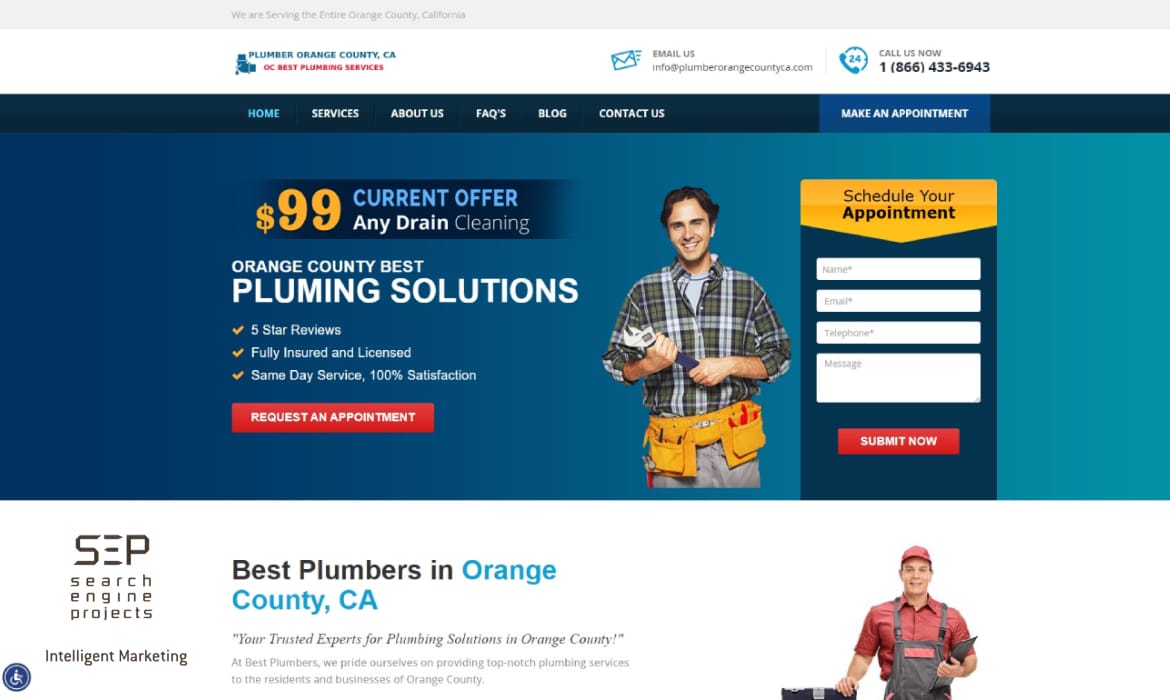
What to publish: service pages that start with a brief “what it is,” “signs you need it,” and “what it costs in your area,” followed by process steps, warranties, and financing options. Add location-specific pages that clearly state the city, neighborhood, and typical job types you handle in that area.
How to structure it: short intro answer, a “what to expect” section, a simple estimate range (if appropriate), and a “before we arrive” checklist.
Trust signals: verified reviews, project photos, license numbers, manufacturer certifications, and service area maps. Make click-to-call and tap-to-text options obvious on mobile devices.
Pro tip: include “voice-style” Q&A lines such as “Who installs tankless water heaters near me?” followed by a crisp answer and your service footprint.
Voice, Mobile, and the Rise of Conversational Search
Voice queries tend to be longer and more conversational, often including intent clues such as “near me,” “open now,” or “best.” Your content doesn’t need to feel like a script, but it should use language that mirrors how people naturally ask questions. If you serve multiple cities, mention them in plain text, not just in a footer list. Keep CTAs short and literal: “Call now to schedule a same-day appointment“, because that phrasing mirrors the actions of a voice response.
Mobile is the default interface for AI answers. Make sure your phone number is click-to-call, your forms are minimal, your map links open correctly, and your above-the-fold copy starts with an answer, not a generic slogan.
What Counts as “AI-Friendly” Content?
Think clarity, structure, and credibility. The most effective pages share a pattern:
- One-sentence answer to the core question.
- Two to three paragraphs of context that a non-expert can understand.
- Specific details that reduce uncertainty include timelines, ranges, coverage areas, and eligibility criteria.
- Evidence: citations, statistics, quotes, or testimonials.
- Next steps with a straightforward CTA.
You don’t have to abandon your brand voice. Keep it human. Just ensure that the “answer layer” is present and easily extractable.
Structured Data: Helpful, Not Optional
Schema markup doesn’t guarantee inclusion in AI answers, but it makes your meaning machine-readable. For most local businesses and professional practices, the essentials include Organization or LocalBusiness, Website, BreadcrumbList, FAQ Page (for legit Q&A), and, when relevant, Service, Product, MedicalOrganization, MedicalCondition, LegalService, or Attorney. Keep it accurate and aligned with the visible page content.
Distribution Matters: Be Where Questions Live
Answer engines don’t only learn from blogs. They absorb signals from review platforms, community sites, and social channels. Encourage reviews that mention specific services and cities. Participate in Q&A threads where your expertise can shine. Repurpose your top service pages into short, informative posts on LinkedIn or Facebook that echo the same “answer first, explain second” structure. Those touchpoints help AI engines triangulate who you are and what you do.
Measuring GEO: What to Watch
GEO adds a few new lenses to your analytics:
Referral patterns from AI engines. Some platforms send traffic with distinctive referrers or parameters. Tag landing pages and watch for shifts as you publish and refresh.
Brand and entity mentions. Track how often your brand, services, and locations are referenced together online. Consistency fuels recognition.
FAQ engagement and time-to-answer. Shorten the time it takes for a visitor to find what they came for. That’s good for users and a positive signal to AI.
Conversion on “answer pages.” The pages designed for GEO should also display well on mobile devices. If they’re not, simplify your CTAs and forms.
Common GEO Missteps (and Fast Fixes)
Mistake: Vague, generic copy.
Fix: State exactly who you serve, where, and how. Use the words customers use.
Mistake: Burying the answer.
Fix: Put the direct answer in the first sentence. You can be friendly and still be clear.
Mistake: Over-stuffed jargon.
Fix: Keep terms accurate but plain. Add a brief glossary if your field requires one.
Mistake: Outdated service pages.
Fix: Refresh details monthly or quarterly. Update pricing ranges, service areas, and FAQs.
Mistake: Inconsistent profiles.
Fix: Align your name, address, phone number, hours, and services consistently across all platforms where your brand appears.
A Quick GEO Makeover Example
Imagine a solar contractor serving Desert Hot Springs and the broader Coachella Valley. The old service page reads like a brochure, long on features, short on answers. A GEO-optimized page would open with: “We design and install residential and commercial solar systems in Desert Hot Springs and across the Coachella Valley, typically completing projects in four to eight weeks from signed contract to activation.” It would be followed by an eligibility checklist, a simple explanation of net metering, local incentives, roof and panel options, and a section called “What to expect during your site visit.” It would include a brief FAQ, recent customer reviews that mention Desert Hot Springs, and a click-to-call number above the fold. That page is far more likely to be quoted—and converted.
The Future of GEO: Voice, Visual, and Hyper-Personalized Answers
GEO is rushing toward more natural interactions. Voice search continues to grow, favoring content that feels conversational and decisive. Visual search will play a larger role in home services, healthcare, and retail—think “What is this leak?” or “Is this mole concerning?” As multimodal AI becomes the norm, content that pairs text with images, diagrams, or short clips will be easier for engines to reuse. On the personalization front, answers will adapt to context—location, device, urgency, even past interactions—so the brands that keep information current and consistent will earn more trust from both users and engines.
How Search Engine Projects Can Help You Win with GEO
At Search Engine Projects, we help businesses show up where it matters now: inside AI-generated answers and AI-assisted recommendations. Our approach blends classic SEO foundations with GEO-specific research and production:
Industry-tuned content systems. We build answer-first pages for healthcare, legal, and local services that read naturally and perform well across AI engines.
Entity and location clarity. We tighten your brand’s topical and geographic signals so AI knows precisely who you are and where you work.
Structured data done right. We implement a schema that aligns with your visible content and enhances your visibility in both traditional search and answer engines.
Review and listings alignment. We help you standardize details and encourage reviews that reinforce your most important services and cities.
Iteration with data. We measure what AI pulls through, how visitors convert on answer pages, and where to refine for stronger visibility and results.
Whether you need a GEO-ready site build, a set of high-intent service pages, or an AI-listing program that directly ties into lead generation, we’ll create a plan that aligns with your goals and market.
Final Takeaway: Innovate, Adapt, Lead
GEO isn’t replacing SEO—it’s expanding what “being found” means. The brands that win next year will be the ones that answer clearly, provide proof, and keep their information fresh where people actually ask questions. Start by identifying your top 10 customer questions, then rebuild those pages with an answer-first structure. You’ll be ahead of most competitors—and you’ll be sending all the right signals to the engines writing tomorrow’s answers.
If you’d like help building GEO-ready pages that get quoted and get calls, Search Engine Projects is ready to partner with you. Let’s turn your expertise into the answers your next customers are already reading.
Our Generative Engine Optimization Services Include
Search Engine Projects provides GEO strategy, AI search visibility audits, entity optimization, schema markup, AI-ready service pages, FAQ optimization, local business listing alignment, review strategy, content updates, and AI referral tracking.
Frequality Asked Questions:
1. What Is Generative Engine Optimization?
Generative Engine Optimization, also known as GEO, is the process of improving your website, content, business information, and online authority so AI-powered platforms can better understand, trust, cite, and recommend your business. GEO focuses on visibility in platforms such as ChatGPT, Google AI Overviews, Perplexity, Gemini, Copilot, and other AI search tools. The goal is to make your business easier for artificial intelligence systems to recognize as a reliable answer when people ask questions related to your services, industry, location, or expertise.
2. How Is GEO Different From SEO?
SEO focuses on improving visibility in traditional search engine results, while GEO focuses on improving visibility inside AI-generated answers. SEO usually targets rankings, keywords, backlinks, local listings, technical optimization, and organic traffic. GEO goes further by improving entity clarity, answer-based content, structured data, brand mentions, expert signals, reviews, and the way your business is referenced across trusted sources. Both are important, but GEO is designed for the way people now search through AI conversations and summarized answers.
3. Can GEO Help My Business Appear In ChatGPT?
Yes, GEO can improve the chances that your business is recognized, mentioned, or recommended by AI platforms such as ChatGPT. However, no company can guarantee placement in AI answers because AI platforms rely on many data sources, algorithms, and trust signals. The best strategy is to make your website and online presence clearer, more authoritative, and easier for AI systems to understand. This includes improving your service pages, FAQs, schema markup, local business information, online reviews, third-party mentions, and overall content quality.
4. Does GEO Replace Traditional SEO?
No, GEO does not replace traditional SEO. GEO works best when it is built on a strong SEO foundation. A business still needs a fast website, optimized service pages, quality content, local SEO, Google Business Profile optimization, backlinks, reviews, and technical SEO. GEO adds another layer by helping AI systems understand who you are, what you offer, where you serve, why you are credible, and when your business should be included in AI-generated recommendations.
5. How Long Does GEO Take To Work?
GEO is a long-term visibility strategy. Some improvements, such as better page structure, schema markup, FAQs, and clearer service descriptions, can be implemented quickly. However, building enough authority for AI platforms to recognize and reference your business may take several months. The timeline depends on your current website quality, industry competition, content depth, review profile, brand mentions, local visibility, and the strength of your overall SEO foundation.
6. What Businesses Need GEO The Most?
GEO is especially important for businesses that depend on online research, local search, and trust-based decisions. This includes law firms, medical practices, dental offices, weight-loss clinics, home service companies, financial services providers, real estate professionals, consultants, restaurants, auto repair shops, and other professional service businesses. If potential customers ask AI tools questions such as “Who is the best company near me?” or “Which provider should I choose?”, GEO can help your business become part of that conversation.
7. Do Search Engine Projects Provide GEO For Law Firms And Medical Practices?
Yes. Search Engine Projects provides Generative Engine Optimization services to law firms, medical practices, dental offices, weight-loss clinics, and other professional service businesses. These industries require strong trust signals, clear service pages, expert content, local authority, reviews, and accurate business information. SEP helps improve website content, schema markup, local visibility, AI-ready FAQs, service descriptions, and online credibility so AI platforms can better understand and evaluate the business.
8. How Do You Measure GEO Performance?
GEO performance can be measured through several signals, including AI referral traffic, branded search growth, organic traffic, visibility for question-based searches, Google Search Console data, Bing Webmaster Tools data, conversion tracking, call tracking, form submissions, and increases in brand mentions across search and AI platforms. Since AI platforms do not always provide complete reporting, GEO performance should be reviewed together with SEO rankings, website engagement, local search performance, and lead quality.
9. What Type Of Content Works Best For GEO?
The best GEO content is clear, helpful, specific, and structured around real customer questions. AI platforms favor content that directly answers questions, clearly explains services, demonstrates expertise, and provides trustworthy information. Strong GEO content often includes service pages, FAQ sections, comparison sections, step-by-step explanations, local landing pages, industry guides, case studies, author information, and structured data. The content should make it easy for AI systems to identify your business, services, service areas, qualifications, and value.
10. Why Should I Hire Search Engine Projects For GEO?
Search Engine Projects has experience in SEO, Google Ads, local SEO, content strategy, web design, analytics, schema markup, and digital marketing for service-based businesses. GEO requires more than writing content. It requires a complete understanding of how search engines, AI platforms, websites, local listings, reviews, and conversion tracking work together. SEP helps businesses improve their visibility in both traditional search results and AI-powered answer engines, giving them a stronger position as customer behavior shifts toward AI-assisted search.