












What Is HVAC Marketing
Why HVAC Companies Need Digital Marketing in 2026
Most HVAC customers start their search online. They compare companies based on Google rankings, map visibility, reviews, photos, website quality, response time, and perceived trustworthiness. Even referrals often check your website and reviews before calling.
HVAC is also a highly competitive local industry. Many companies are targeting the same services and cities, including AC repair, furnace repair, HVAC installation, heat pump installation, air duct services, thermostat installation, emergency HVAC service, and maintenance plans. If your HVAC website is thin, outdated, slow, or poorly optimized, it becomes harder to compete.
Digital marketing also helps HVAC companies prepare for seasonal demand. AC repair searches often rise during hot weather. Searches for furnace repair and heating services usually increase during the colder months. Maintenance plans, tune-ups, indoor air quality, and energy-efficiency campaigns can help create leads outside peak emergency seasons.
A good HVAC marketing plan should help your company appear in four major places: Google organic search, Google Maps, paid search results, Yelp listings, and AI-generated answers. This is where SEO and GEO work together.
20 HVAC Marketing Ideas That Generate Local Leads
1. Build a Conversion-Focused HVAC Website
Your HVAC website should do more than look professional. It should convert visitors into calls, form submissions, booked appointments, and service requests. A modern HVAC website needs clear service pages, strong local signals, fast load times, a mobile-friendly design, visible phone numbers, and simple contact options.
Every major service should have its own page. Instead of placing all services on one general page, create separate pages for AC repair, AC installation, furnace repair, heating installation, HVAC maintenance, emergency HVAC service, heat pumps, ductwork, indoor air quality, commercial HVAC, and other important services.
A conversion-focused HVAC website should include clear calls to action such as “Call Now,” “Schedule Service,” “Request an Estimate,” and “Book HVAC Service.” These buttons should appear near the top of the page, throughout service pages, and again near the bottom.
Your website should also answer common customer questions before they call. Visitors want to know what areas you serve, what services you provide, whether you offer emergency service, whether you work with residential or commercial systems, and why they should trust your company.
2. Optimize Your Google Business Profile
Your Google Business Profile is one of the most important local marketing assets for an HVAC company. It helps your business appear on Google Maps and in local search results when people search for HVAC services near them.
Your profile should include the correct business name, address, phone number, website link, business hours, service categories, service areas, photos, appointment links, and a detailed business description. Your main category should match your primary service, such as HVAC contractor. You can also add related services and secondary categories when they accurately represent your business.
Photos are important. Add photos of your team, trucks, equipment, completed installations, office, service work, and branded vehicles. Real photos usually build more trust than generic stock images.
Post updates regularly. You can use Google Business Profile posts to promote seasonal tune-ups, emergency services, maintenance plans, rebates, new equipment, financing, and special offers. Keeping your profile active can support customer trust and local visibility.
3. Improve Local SEO for HVAC Services
Local SEO helps your HVAC company rank for searches that include city names, nearby service areas, and “near me” keywords. Examples include “AC repair in Anaheim,” “HVAC company near me,” “furnace repair in Irvine,” and “emergency HVAC service in Orange County.”
Local SEO starts with your website structure. Your service pages should clearly mention what you do, who you serve, and where you provide service. Each important service should naturally connect to relevant local areas.
Your business name, address, and phone number should be consistent across your website, Google Business Profile, Yelp, Bing Places, Apple Maps, industry directories, social profiles, and citation websites. Inconsistent contact information can create confusion for both search engines and customers.
Local SEO also depends on content quality. A short page that only says “we provide HVAC services” is not enough. Your pages should explain the service, common problems, signs customers need help, benefits of professional service, your process, related services, service areas, and FAQs.
4. Create City and Service Area Pages
HVAC companies often serve multiple cities, but many websites only optimize for one main city. This limits visibility in nearby communities. If your company serves several local areas, create high-quality city pages for your most important service locations.
A strong city page should not be copied and pasted with only the city name changed. Each page should include unique local content, relevant services, neighborhood or climate references, common HVAC needs in that area, nearby service coverage, and a clear call to action.

For example, an HVAC company serving Orange County may need pages for Anaheim, Irvine, Orange, Tustin, Yorba Linda, Fullerton, Costa Mesa, Newport Beach, Mission Viejo, Laguna Hills, and surrounding cities. Each page should be useful to someone searching from that specific location.
City pages can also improve GEO by providing clear signals about where your company operates and what services you provide in each location.
5. Run Google Local Services Ads
Google Local Services Ads can help HVAC companies appear at the top of search results for high-intent local searches. These ads are especially useful for emergency services, repair calls, and customers looking for a nearby provider.
Local Services Ads can work well because users can call directly from the ad, view reviews, and see trust indicators. HVAC companies should ensure the profile is complete, service areas are accurate, the budget is monitored, and leads are reviewed regularly.
Not every lead will be perfect. Some calls may be outside your service area, unrelated to your services, or not ready to book. That is why lead tracking and lead quality review are important. Your team should monitor calls, dispute invalid leads when eligible, and adjust services or locations when needed.
6. Use Google Ads for Emergency HVAC Searches
Google Ads can generate fast HVAC leads when campaigns are built correctly. HVAC search campaigns should focus on high-intent keywords, strong landing pages, call extensions, location targeting, and conversion tracking.
Good keyword examples include “C repair near me,” “emergency AC repair,” “furnace repair near me,” “HVAC repair company,” “air conditioning installation,” “commercial HVAC contractor,” and “heating repair service.“Avoid broad keywords that attract people looking for jobs, training, parts, or DIY information unless those searches match your business goals.
HVAC ads should be separated by service type. AC repair, furnace repair, HVAC installation, maintenance plans, and commercial HVAC should not all be lumped into a single generic campaign. A better campaign structure usually provides better control over budget, messaging, and performance.
Landing pages matter. If someone clicks an ad for emergency AC repair, they should land on an emergency AC repair page, not a general homepage.
7. Build More Google and Yelp Reviews
Reviews are one of the strongest trust signals for HVAC companies. Homeowners want to know whether your company is reliable, professional, responsive, honest, and capable of solving their problem.
Ask satisfied customers to leave reviews after service calls, installations, tune-ups, and maintenance visits. Make the process simple by sending a direct review link through email or text message. Your technicians and office staff should also be trained to ask at the right time.

Respond to reviews professionally. Thank customers for positive feedback and respond carefully to negative reviews. A thoughtful response can show future customers that your company cares about service quality and communication.
Reviews also help AI and local search systems understand your reputation. A company with consistent, detailed, service-specific reviews is easier to trust than a company with very few reviews or no recent feedback.
8. Create HVAC Blog Content
Blog content helps HVAC companies answer common questions, attract informational searches, and build topical authority. A strong HVAC blog should not only publish generic posts. It should focus on customer problems, seasonal needs, service education, and local search intent.
Good HVAC blog topics include “How to Know If Your AC Needs Repair,” “Why Your Furnace Is Blowing Cold Air,” “How Often Should You Schedule HVAC Maintenance,” “Signs Your Ductwork Needs Repair,” “What to Do When Your AC Stops Working,” and “How to Improve Indoor Air Quality at Home.”
Blog content can also support service pages by linking visitors to related services. For example, a blog about “why your AC is making noise can link to your AC repair page. A blog about “benefits of a maintenance plan” can link to your HVAC maintenance service page.
For GEO, blog content should include clear answers, definitions, examples, FAQs, and structured sections. AI platforms are more likely to understand and summarize content that is direct, organized, and helpful.
9. Use Seasonal HVAC Campaigns
HVAC demand changes throughout the year. Your marketing should match seasonal behavior. In spring and summer, focus on AC repair, AC installation, tune-ups, refrigerant issues, airflow problems, thermostat problems, and emergency cooling service. In fall and winter, focus on furnace repair, heating tune-ups, heat pumps, indoor air quality, and system replacement.
Seasonal campaigns should be planned before demand peaks. If you wait until the weather changes, your competitors may already be running ads, ranking for seasonal keywords, and sending email campaigns.
Seasonal content can include landing pages, Google Business Profile posts, blog articles, email campaigns, social posts, and paid ads. For example, a spring campaign can promote “Schedule Your AC Tune-Up Before the Heat Arrives.” A winter campaign can promote “Book Your Furnace Safety Check Before Cold Weather.“
10. Add Call Tracking and Lead Tracking
HVAC marketing should be measured by leads, booked jobs, revenue, and return on investment. Website traffic alone does not show whether your marketing is working.

Use call tracking to measure which channels generate phone calls. Use form tracking to measure contact form submissions. Use conversion tracking for Google Ads and Local Services Ads. Track booked appointments separately from raw leads so you know which campaigns produce real business.
You should also review call quality. Some keywords may generate many calls but low-quality leads. Other keywords may generate fewer calls but better jobs. Without tracking, it is easy to spend money on campaigns that look busy but do not produce profitable results.
11. Use Retargeting Ads
Many website visitors do not call on their first visit to your site. Retargeting ads help bring those visitors back after they leave. This can be useful for HVAC installation, replacement systems, maintenance plans, indoor air quality products, and commercial HVAC services.
Retargeting works best when the message matches the visitor’s interest. Someone who visited an AC installation page should see a different ad than someone who visited a furnace repair page. A visitor who looked at maintenance plans may respond well to reminders about seasonal tune-ups.
Retargeting should be used carefully and professionally. The goal is to stay visible, not annoy potential customers.
12. Create HVAC Video Content
Video can help HVAC companies build trust before a customer calls. Short videos can introduce your company, explain services, show completed projects, answer common questions, and highlight your technicians.
Good video topics include “What to Do Before Calling for AC Repair,” “Signs You Need a New HVAC System,” “How HVAC Maintenance Helps Prevent Breakdowns,” “What Happens During an AC Tune-Up,” and “How to Choose the Right HVAC Contractor.”
Videos can be used on your website, YouTube, Google Business Profile, social media, landing pages, and email campaigns. Video content can also support GEO by giving search engines and AI systems more context about your expertise and services.
13. Use Email Marketing for Maintenance Plans
Email marketing is useful for staying connected with existing customers. HVAC companies can use email to promote seasonal tune-ups, maintenance plans, filter replacement reminders, equipment checkups, special offers, and indoor air quality services.
A customer who used your company once for AC repair may also need furnace service, ductwork, thermostat replacement, or future system installation. Email helps keep your company top of mind with past customers before they search for another provider.
Email campaigns should be helpful and timely. Avoid sending only sales messages. Include useful tips, seasonal reminders, and reasons customers should schedule service before a system fails.
14. Promote Financing and Special Offers
HVAC repairs and replacements can be unexpected expenses. If your company offers financing, rebates, maintenance discounts, or seasonal promotions, make that information easy to find.
Special offers can improve conversion rates when they are presented clearly. Add offers to your homepage, service pages, Google Business Profile posts, landing pages, and ads. Use simple language and avoid confusing terms.
Examples include AC tune-up specials, furnace safety check offers, maintenance plan discounts, installation rebates, free second opinions, and financing options for system replacement.
15. Build Referral Programs
Word of mouth is still valuable for HVAC companies. A satisfied customer can recommend your company to family, friends, neighbors, property managers, and local business owners.
Create a simple referral program that rewards customers for sending new business. The offer should be easy to understand and easy to share. Your team can mention it after successful service calls, include it in follow-up emails, and promote it on your website.
Referral programs work best when the customer experience is already strong. Fast response times, honest communication, professional technicians, clean work, and reliable service make customers more willing to recommend your company.
16. Use Social Media for Trust Building
Social media may not always generate immediate HVAC repair calls, but it helps build credibility. Homeowners often check social profiles to see whether a company is active, professional, and real.
Post photos of your team, trucks, projects, installations, safety tips, seasonal reminders, customer reviews, and community involvement. Short educational posts can also help customers understand when to call for service.
For HVAC companies, social media should support trust and brand recognition. It should not replace SEO, Google Maps, or paid search, but it can strengthen your overall digital presence.
17. Improve Website Speed and Mobile Experience
Many HVAC leads come from mobile users. A homeowner with a broken AC system may search from a phone and call the first company that looks trustworthy and easy to reach.
Your website should load quickly, display correctly on mobile devices, and make it easy to call. Phone numbers should be clickable. Forms should be short. Service pages should be easy to read. Buttons should be visible without forcing users to search.
A slow or confusing website can waste paid ad traffic and reduce organic conversions. Even if your SEO rankings improve, poor website experience can prevent visitors from becoming leads.
18. Add Case Studies and Before-and-After Results
Case studies help customers understand the value of your work. They also help search engines and AI platforms recognize your real-world experience.
An HVAC case study can explain the customer’s problem, the diagnosis, the service performed, the equipment installed, the result, and the location served. For example, a case study could describe an AC replacement in a specific city, a commercial HVAC repair for a local business, or an indoor air quality improvement project for a homeowner.
Before-and-after photos, technician notes, customer feedback, and project details can make these pages more useful. Case studies are especially helpful for high-value services such as HVAC installation, HVAC replacement systems, commercial HVAC, ductwork, and energy-efficiency upgrades.
19. Track Cost Per Lead and Booked Jobs
Business results should measure marketing success. HVAC companies should track cost per lead, cost per booked appointment, close rate, average job value, revenue by channel, and return on ad spend.
A campaign that generates cheap leads is not always the best. If those leads do not book or produce revenue, they may waste time and budget. A campaign with a higher cost per lead may be more profitable if the leads turn into larger jobs.
Tracking helps you decide where to invest. You may find that Google Ads works best for emergency repair, SEO works best for long-term visibility, Google Maps works best for local trust, and email works best for maintenance plans.
20. Work With an HVAC Marketing Agency
HVAC marketing requires strategy, technical SEO, content planning, advertising management, landing page optimization, review building, tracking, and ongoing improvement. Many HVAC companies do not have the time or internal staff to manage all of this properly.
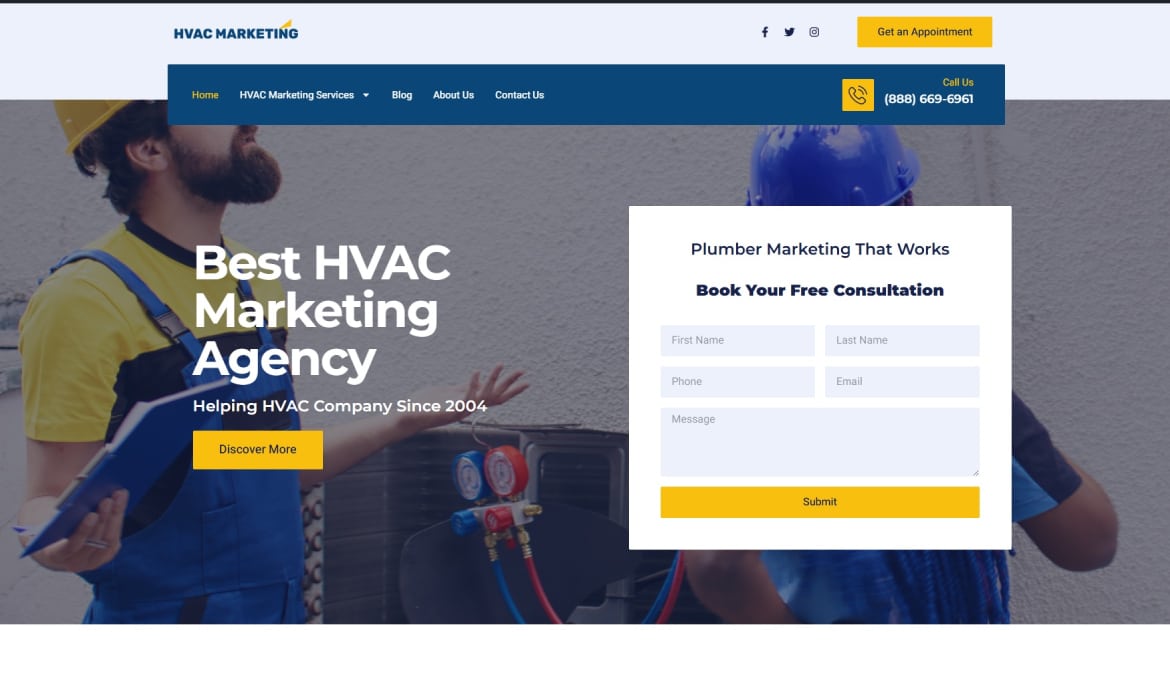
An HVAC marketing agency can help create a complete plan that includes website improvements, SEO, Google Business Profile optimization, Google Ads, Local Services Ads, Yelp Ads, content creation, review strategy, reporting, and GEO.
The right agency should understand local search, lead quality, service-area marketing, seasonal HVAC demand, and how customers choose HVAC companies online. The goal should be more than traffic. The goal should be more qualified local leads, more booked appointments, and better visibility across search engines and AI platforms.
Best HVAC Marketing Channels by Goal
Different marketing channels serve different goals. HVAC companies should not rely on only one source of leads. A balanced strategy creates both immediate opportunities and long-term growth.
| Goal | Best Marketing Channel | Why It Works |
|---|---|---|
| Emergency AC Repair Leads | Google Ads & Google Local Services Ads | Captures homeowners actively searching for immediate HVAC service. |
| Long-Term Local Visibility | Local SEO & Google Business Profile | Improves Google rankings, Maps visibility, and consistent organic lead generation. |
| Build Trust | Google Reviews, Yelp Reviews, Case Studies & Videos | Increases credibility and helps homeowners choose your HVAC company. |
| Repeat Customers | Email Marketing & Maintenance Plans | Keeps your business in front of past customers and increases repeat service. |
| AI Search Visibility | Generative Engine Optimization (GEO) | Helps AI platforms understand, summarize, and recommend your HVAC business. |
For emergency repair leads, Google Ads and Google Local Services Ads are often effective because they reach people who need help now. For long-term visibility, SEO and Google Business Profile optimization are essential. For trust building, reviews, case studies, photos, and video content are valuable. For repeat customers, email marketing and maintenance plan campaigns can help. For AI-search visibility, GEO-focused content, FAQs, structured service pages, and clear business information are important.
A complete HVAC marketing strategy should connect all of these channels. Your ads should send visitors to strong landing pages. Your blog posts should link to service pages. Your Google Business Profile should match your website. Your reviews should support trust. Your tracking should show which channels generate real leads.
HVAC Marketing Plan by Season
A seasonal HVAC marketing plan helps your company promote the right services at the right time.
In spring, focus on AC tune-ups, maintenance plans, system inspections, indoor air quality, thermostat upgrades, and summer heat preparation. This is also a good time to publish blog posts and ads about preventing AC breakdowns.
In summer, focus on AC repair, emergency cooling service, refrigerant problems, airflow issues, AC replacement, and fast response times. Your website and ads should make it easy for customers to call quickly.
In fall, focus on furnace tune-ups, heat pump service, heating system inspections, ductwork, and indoor air quality. Fall is also a good time to promote maintenance memberships before winter demand increases.
In winter, focus on furnace and heating repairs, emergency heating services, heat pumps, carbon monoxide safety, and system replacements. Customers want reliability, safety, and quick service during colder weather.
Year-round, continue building reviews, publishing content, improving SEO, updating your Google Business Profile, tracking leads, and improving conversion rates.
SEO and GEO Checklist for HVAC Companies
Your HVAC website should include individual service pages, city pages, clear calls to action, clickable phone numbers, fast mobile performance, service-area information, review links, project photos, and helpful FAQs.
Your local SEO should include Google Business Profile optimization, consistent business listings, local citations, review management, service-area targeting, internal linking, and locally relevant content.
Your GEO strategy should include clear answers, direct definitions, expert explanations, structured headings, FAQ sections, schema markup, original insights, service-specific examples, and detailed information about your company’s services and locations.

Your paid advertising should include conversion tracking, call tracking, location targeting, negative keywords, service-specific landing pages, and regular lead-quality review.
Your content strategy should include blog posts, service pages, city pages, case studies, seasonal campaigns, videos, and customer education.
Important HVAC Keywords to Target
HVAC companies should target a mix of service, local, commercial, emergency, and informational keywords.
Examples include AC repair near me, HVAC company near me, furnace repair near me, emergency HVAC service, air conditioning installation, heating repair, HVAC maintenance, HVAC contractor, commercial HVAC service, indoor air quality service, duct repair, heat pump installation, thermostat installation, AC tune-up, furnace tune-up, HVAC replacement, and local city-based terms such as AC repair in your city.
The best keyword strategy should match your actual services, locations, budget, and business goals. Ranking for a keyword is only valuable if it brings the type of customer you want.
Get More HVAC Leads With Search Engine Projects
HVAC marketing in 2026 requires more than one tactic. Your company needs a strong website, local SEO, Google Maps visibility, paid advertising, reviews, content, tracking, and GEO-focused structure. The companies that win online are usually the companies that make it easy for customers, search engines, and AI platforms to understand who they are, what they do, where they work, and why they are trustworthy.
Search Engine Projects helps HVAC companies improve their online visibility, generate more local leads, and build marketing systems that support long-term growth. If your HVAC company needs help with SEO, Google Ads, Google Business Profile optimization, Yelp Ads, website design, or GEO, our team can evaluate your current online presence and create a strategy to help you compete in your local market.
Call Search Engine Projects today to discuss how your HVAC company can generate more qualified local leads.
Frequently Asked Questions About HVAC Marketing
1. What is the best marketing strategy for HVAC companies?
The best HVAC marketing strategy combines local SEO, Google Business Profile optimization, Google Ads, Local Services Ads, reviews, service pages, city pages, and lead tracking. HVAC companies should use paid ads for faster leads and SEO for long-term visibility.
2. How do HVAC companies get more local leads?
HVAC companies can get more local leads by ranking higher on Google, improving Google Maps visibility, running targeted ads, building more reviews, creating strong service pages, and making the website easy to use on mobile devices.
3. Is SEO important for HVAC contractors?
Yes. SEO helps HVAC contractors appear when local customers search for AC repair, furnace repair, HVAC installation, maintenance, and emergency service. Strong SEO can reduce dependence on paid ads over time and improve long-term lead generation.
4. Should HVAC companies use Google Ads?
Google Ads can be very useful for HVAC companies, especially for emergency repair, seasonal demand, and competitive service areas. Ads should be linked to strong landing pages and carefully tracked to measure lead quality and booked jobs.
5. How can an HVAC company rank higher on Google Maps?
An HVAC company can improve Google Maps visibility by optimizing its Google Business Profile, adding accurate service areas, collecting reviews, posting updates, adding photos, keeping business information consistent, and building local website authority.
6. How many reviews does an HVAC company need?
No fixed number guarantees rankings or leads. However, HVAC companies should consistently solicit new reviews because customers often compare review counts, review quality, star ratings, and recent feedback before calling.
7. What pages should an HVAC website have?
An HVAC website should include a homepage, about page, contact page, service pages, city pages, financing or special-offer pages, review page, blog, case studies, and emergency service pages, when applicable. Each major HVAC service should have its own dedicated page.
8. What is GEO for HVAC companies?
GEO stands for Generative Engine Optimization. For HVAC companies, GEO means creating clear, detailed, structured, and helpful content that AI platforms can understand and use when answering questions about HVAC services, contractors, local service areas, and common heating and cooling problems.
9. What is the best way to track HVAC marketing results?
The best way to track HVAC marketing results is to use call tracking, form tracking, Google Ads conversion tracking, Local Services Ads lead review, CRM reporting, and booked-job tracking. HVAC companies should measure not only leads, but also lead quality and revenue.
10. Should HVAC companies hire a marketing agency?
HVAC companies should consider hiring a marketing agency if they need help with SEO, paid ads, website design, Google Maps, content, reviews, tracking, and GEO. A specialized agency can help develop a comprehensive strategy rather than relying on disconnected marketing efforts.